
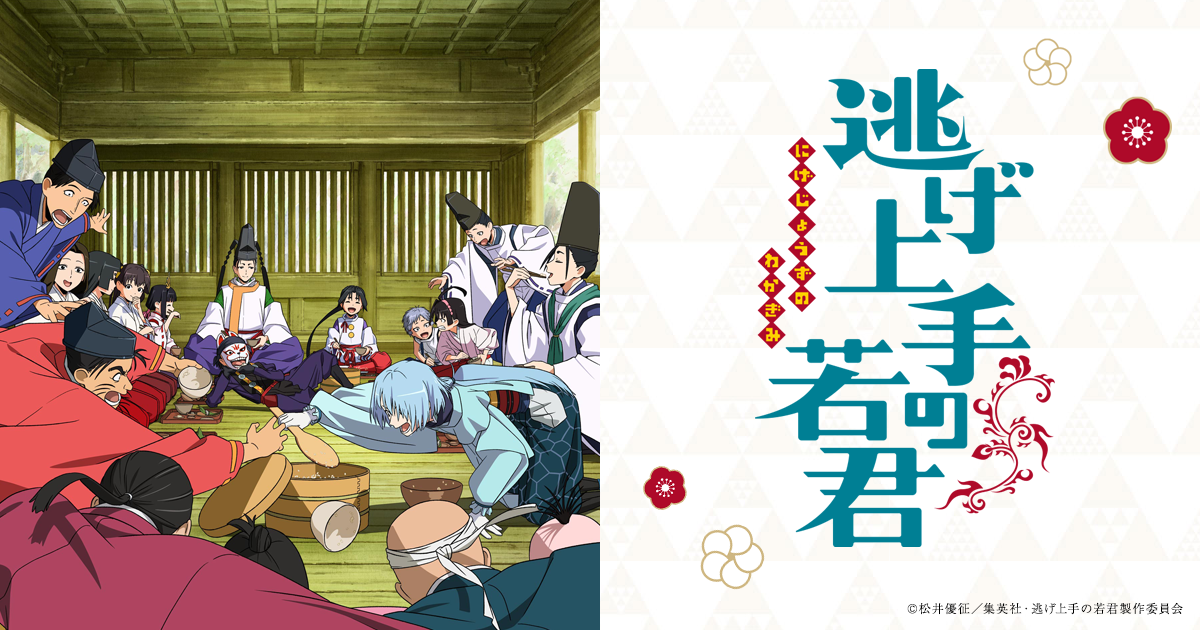
The Elusive Samurai has returned after a two-year gap, which is long enough to remember that Tokiyuki is very good at running and forget almost everything about the collapsing government around him.
That political fog matters. Season 1 disguised a dense piece of fourteenth-century history as a bright, weird shonen about a child who becomes ecstatic when somebody tries to kill him. Underneath the faces, divine prophecies, and physics-defying eyeballs, it built a careful story about legitimacy. Tokiyuki has the bloodline to rule, Ashikaga Takauji has the power and public support, and Suwa Yorishige has a plan that depends on a boy surviving long enough to become a leader.
Season 2 began in Japan on July 17, 2026. The official site calls its premiere episode 13, while AniList treats it as the first episode of a separate 12-episode season. Either label works. The important part is that this is a direct continuation, not a reset and not a side story.
You do not need to rewatch every severed head and archery contest. You do need to remember who betrayed whom, why Tokiyuki’s habit of escaping is a real military idea, and which child handles which job in the Elusive Warriors. Here is the clean route back in.
The quick answer: what to remember before Season 2
If you only have five minutes, keep these eight points:
- Hojo Tokiyuki is the surviving heir of the fallen Kamakura shogunate. Ashikaga Takauji betrayed that government in 1333, and Tokiyuki escaped the destruction of his family.
- Suwa Yorishige hid Tokiyuki in Shinano. Yorishige is a priest, political operator, parental figure, and unreliable prophet rolled into one unnervingly cheerful package.
- Tokiyuki’s goal is to retake Kamakura. He is not ready to do that at the end of Season 1, but every local mission has been training for it.
- Running is Tokiyuki’s strength, not his shame. He survives, reads the battlefield, exhausts stronger enemies, and creates openings for allies.
- The Elusive Warriors are now a functioning unit. Shizuku, Kojiro, Ayako, Genba, and Fubuki each cover a different weakness in Tokiyuki’s skill set.
- Ogasawara Sadamune is a dangerous local opponent, not the final villain. His absurd eyesight is funny until it starts controlling a battlefield.
- Ashikaga Takauji is the larger problem. He destroyed Tokiyuki’s world and now has the charisma to make the new order look desirable.
- Season 1 ended with Tokiyuki acting like a commander. He helped turn a doomed last stand into a retreat that protected soldiers and civilians.
That is enough to press play. If names like Genba and Fubuki are still sliding out of your brain, keep going.
Season 2 release date, episode count, and production
The official July 4 broadcast announcement puts the Japanese premiere on July 17, 2026 at 11:30 p.m. in Fuji TV’s Noitamina block. Prime Video received the first Japanese subscription stream at midnight, and a larger group of Japanese services began rolling the episode out on July 21. Those are Japan-specific details, so check your local service rather than assuming the same hour applies everywhere.
AniList’s Season 2 entry lists 12 episodes, each about 24 minutes, with CloverWorks returning as the animation studio. It also links Crunchyroll as a streaming outlet, although catalogs and release timing can vary by region. The safe advice is simple: open the series page in your country and verify the new season is present before buying another subscription.
There is a numbering wrinkle. Season 1 had 12 regular episodes in 2024. The official story page continues straight into “Episode 13” for the 2026 premiere, while databases separate those episodes into Season 1 and Season 2. Nobody has lost an episode. The production is using continuous story numbering; streaming libraries may use seasonal numbering.
The continuity behind the camera is stronger than the labeling. The official staff list keeps Yuta Yamazaki as director, Yoriko Tomita on series composition, Yasushi Nishiya as character designer and chief animation director, Yusuke Kawakami as assistant director, and CloverWorks in charge of animation. That is the crew responsible for Season 1’s unusual mix of candy-colored comedy, graphic violence, and sudden bursts of immaculate movement.
Aniplex also described the Spring 2026 Season 1 rebroadcast and the July continuation as consecutive cours on Fuji TV. In practical terms, Japanese viewers got a built-in weekly refresher before the new material. Everyone else gets this article and the mild embarrassment of realizing two years have passed.
Where Season 1 actually left Tokiyuki
Season 1 begins with the Kamakura shogunate falling in 1333 and spends most of its run making Tokiyuki earn the smallest pieces of authority.
At first, he is an heir without a home, an army, or a useful conventional combat skill. He can barely swing a sword. Yorishige sees value in the one ability samurai culture treats as cowardice: Tokiyuki can escape almost anything. The series then gives him increasingly complicated problems that cannot be solved by hitting the strongest enemy harder.
The dog-hunting contest against Sadamune teaches him to combine evasion, horsemanship, and archery. The theft mission with Genba turns stealth into political intelligence. The village battle introduces Fubuki and forces Tokiyuki to use his movement inside a lethal duel. None of these episodes is a random shonen test. Each adds one tool a future commander will need.
The final two episodes move the lesson from personal survival to collective survival. Hoshina Yasaburo is ready to die fighting an abusive provincial governor because he believes death in battle will preserve his honor. Tokiyuki argues for the harder option: live, retreat, protect the civilians, and fight again under better conditions.
The official Episode 12 synopsis frames the climax as a flat-ground withdrawal while Hoshina’s smaller force shields local people from a larger army. Tokiyuki uses the talent everyone mocked to organize that escape. It is the clearest sign yet that “elusive” can describe a leader, not merely a gifted child avoiding sword practice.
That is the emotional checkpoint. Tokiyuki still wants Kamakura back, but by the finale he is beginning to understand what reclaiming it would require. A title inherited by blood is not enough. People have to trust his decisions when those decisions are frightening, humiliating, or less dramatic than dying beautifully.
The Elusive Warriors: the five names worth refreshing
The official character guide is useful because this group is not five interchangeable friends cheering behind the protagonist. It is a compact command structure.
Shizuku: support, judgment, and quiet authority
Shizuku is Yorishige’s daughter and the group’s administrator. She handles the household, supports the team in battle, uses limited divine techniques, and can act as Yorishige’s representative. When everybody else is reacting to the loudest problem in the room, Shizuku is usually tracking what that problem changes.
Remember her as the bridge between Tokiyuki’s child squad and Yorishige’s adult political network. She is not just the calm girl who explains things.
Kojiro: the dependable sword
Kojiro is the group’s strongest straightforward swordsman. More importantly, he watches the battlefield and looks after the others instead of treating combat as a personal highlight reel. His friendship with Tokiyuki gives the young lord somebody who can disagree, tease, and still obey when the decision matters.
If Tokiyuki identifies the escape route, Kojiro is one of the people who makes sure the enemy cannot close it.
Ayako: power without hesitation
Ayako brings physical strength, energy, and a willingness to crash into the dangerous part of a plan. Her coordination with Kojiro matters because their skills let the group survive direct fights that Tokiyuki and Genba are not built to win cleanly.
She is also part of what keeps the show from becoming a dry strategy lecture. The Elusive Warriors work because their personalities are too large for quiet military efficiency.
Genba: disguise and information
Genba is the fox-masked thief who can disguise himself and gather information. He began as a mercenary who trusted money more than loyalty. Joining Tokiyuki did not magically turn him into a saint, which is good. His suspicion and self-interest give the team a tool nobody else has: he assumes other people may be lying because he understands exactly how lying works.
In a war over legitimacy, intelligence is not a side skill. Knowing which order is genuine, which official can be manipulated, and which route is watched can matter more than winning a duel.
Fubuki: the strategist who makes the team complete
Fubuki joined during the village arc. He can fight, teach, and design tactics under pressure. He is the closest thing the children have to a dedicated battlefield planner, and his presence lets Tokiyuki grow into command without suddenly becoming a genius at every military discipline.
Also, he eats an unreasonable amount. That joke is easier to remember than his résumé, so use it as the hook if you have to.
The three adults who define the political board
The children carry the action, but three adults define what their victories mean.
Suwa Yorishige is building a cause
Yorishige rescued Tokiyuki, gave him shelter in Suwa, and keeps insisting that the boy will become a hero. His visions of the future are incomplete, which makes him both powerful and dangerous. He knows enough to push Tokiyuki toward a destiny, but not enough to remove uncertainty from the path.
His brightest jokes sit beside a serious political project. He is assembling allies, training an heir, and preparing resistance while outwardly operating inside a new order controlled by the court and Ashikaga power. He loves Tokiyuki, but he is also using Tokiyuki’s name. The tension between those truths is one of the show’s best ideas.
Ogasawara Sadamune is a rival with a job
Sadamune is the new governor of Shinano and an Ashikaga-aligned obstacle. His superhuman eyesight turns archery and surveillance into something close to a supernatural ability. Season 1 repeatedly makes his face ridiculous, then reminds you that he is competent, observant, and capable of rewarding useful subordinates.
Do not flatten him into a weekly villain. He represents the new administration arriving in Suwa’s territory and measuring everything Tokiyuki’s allies are trying to hide.
Ashikaga Takauji is winning more than battles
Takauji betrayed the Kamakura shogunate and caused the destruction that sent Tokiyuki running. A simpler series would make him visibly evil in every scene. The Elusive Samurai makes him charismatic, admired, and almost impossible to read.
That matters because episode 13’s official synopsis says Ashikaga’s new government in Kamakura is gaining overwhelming public support. Tokiyuki misses his home, but home has not remained frozen in grief waiting for him. A rival order is becoming normal. Retaking a city that hates its ruler is one problem. Retaking one that has accepted him is much worse.
The real history without spoiling the exact adaptation
Tokiyuki was a real historical figure, although the anime’s divine powers and grotesque visual jokes are obviously storytelling choices.
A sourced biography of Hojo Tokiyuki records the broad line: after the 1333 siege of Kamakura and the destruction of much of his family, Tokiyuki fled to Shinano and found protection with Suwa Yorishige. He gathered an army, returned to Kamakura in 1335, forced Ashikaga Tadayoshi to flee, and briefly re-entered the city before Ashikaga Takauji drove him out.
Knowing that does not reveal how CloverWorks will stage each battle or where this 12-episode season will stop. It does clarify the direction. Season 1 was not building toward an endless set of local errands. The calendar is moving toward 1335, and Tokiyuki’s dream of returning to Kamakura has a historical campaign behind it.
The more interesting question is not whether he reaches the city. History already answers that. The question is what kind of commander the anime makes him by the time he tries, and what his survival-first philosophy costs the people who follow him.
That is an angle competitors often miss when they sell the series as “historical Demon Slayer.” Tokiyuki is not another weak hero waiting for a conventional power-up. His unusual skill changes the moral argument of the story. Samurai honor says a beautiful death can prove loyalty. Tokiyuki keeps asking whether loyalty might be better proved by bringing people home alive.
Do you need to rewatch Season 1?
Probably not. It depends on how much you remember.
If you remember the cast and the fall of Kamakura
Start Season 2 now. The official episode guide moves directly from episode 12 into episode 13, so its published sequence does not insert another entry between them.
If you remember Tokiyuki but not the politics
Rewatch episodes 1, 4, 6, 8, 11, and 12.
- Episode 1 restores the fall of Kamakura, Takauji’s betrayal, and Yorishige’s promise.
- Episode 4 establishes Sadamune and the new balance of power in Shinano.
- Episode 6 shows why Genba and information warfare matter.
- Episode 8 introduces Fubuki and the team as a tactical unit.
- Episodes 11-12 complete Tokiyuki’s first real command lesson.
Six episodes take roughly two and a half hours. That is a sane evening or two for a busy adult. It is also shorter than restarting a 12-episode season, losing momentum in the middle, and pretending the full rewatch was spiritually necessary.
If you barely remember anything
Watch all 12 Season 1 episodes. At four episodes a night, you will be current in three evenings. The series is compact, and its local arcs plant details that become more useful as the political scale expands.
The Mushoku Tensei Season 3 catch-up guide uses the same practical rule: refresh the active story threads, not every frame. A sequel should not become homework you avoid for six months because your rewatch plan was too ambitious.
What to expect from Season 2
The safest expectation is escalation with the same creative identity.
CloverWorks and the major staff are back. The core team has been assembled. Tokiyuki has moved from escaping alone to directing a retreat. Ashikaga authority is becoming socially entrenched in Kamakura. The historical timeline is closing in on the campaign the first season promised.
That should mean larger military decisions and less time spent recruiting one child at a time. It should not mean the series suddenly stops being bizarre. Season 1 could place horror, slapstick, political explanation, and a beautifully animated movement sequence inside the same episode. Production continuity suggests Season 2 will keep that tonal risk instead of sanding the show into ordinary prestige action.
The official Season 2 music page names Kento Nakajima’s “Onigoto” as the opening and Botchi Boromaru’s “Romantic ga Hoshiinara,” featuring Nao Kosaka, Yoko Shogenji, and Kaho Fujishima, as the ending. That music lineup fits the show’s refusal to treat historical warfare as a reason to become visually gray and emotionally stiff.
If you are sorting a crowded seasonal list, this is also a different commitment from the giant fantasy sequels covered in our Summer 2026 anime preview. Twelve listed episodes and a 12-episode first season make the whole franchise manageable. You can catch up without signing away the rest of summer.
The spoiler-light verdict
Catch up and watch Season 2 if you want a historical action series where tactics and legitimacy matter as much as sword fights. The production continuity is reassuring, the first season’s character work has already built the squad, and the story is finally positioned to move toward the campaign promised in episode 1.
Skip it if the facial distortion, tonal whiplash, or child-centered cast drove you away the first time. Those are not temporary quirks. They are the show’s language. Season 2 may get larger, but it is unlikely to become more conventional.
For returning viewers, the best move is not a full recap video and not a panicked 12-episode binge. Read the eight-point summary, rewatch episodes 11 and 12 if you have an hour, then start episode 13. Tokiyuki spent an entire season proving that retreat can be strategic. You are allowed to skip the unnecessary rewatch and reach the important part alive.
Sources checked for this guide
Facts and asset provenance were rechecked on July 21, 2026 against the official anime homepage, official broadcast announcement, official episode guide, official character profiles, official staff credits, official music credits, Aniplex’s season announcement, AniList’s Season 2 record, and the sourced historical biography of Hojo Tokiyuki. Streaming availability can change by country, so verify the title inside your local service.
FAQ
How many episodes are in The Elusive Samurai Season 2?
AniList lists 12 episodes at roughly 24 minutes each. The official anime site numbers the premiere as episode 13 because it continues directly after Season 1’s 12 episodes.
When did The Elusive Samurai Season 2 start?
The Japanese television broadcast began July 17, 2026 in Fuji TV’s Noitamina block. Japanese streaming started in stages on July 17 and July 21. International timing varies by platform and region.
Do I need to watch Season 1 before Season 2?
Yes. Season 2 is a direct continuation. There is no recap movie or standalone reset between them. New viewers should watch Season 1’s 12 episodes first.
Where can I watch The Elusive Samurai Season 2?
AniList links Crunchyroll for the series, while the official Japanese page lists Prime Video and several Japan-only services. Check your regional catalog because availability and release timing are not universal.
Is The Elusive Samurai based on real history?
Yes, loosely. Hojo Tokiyuki, Suwa Yorishige, and Ashikaga Takauji were historical figures connected to the fall of the Kamakura shogunate and Tokiyuki’s 1335 attempt to retake Kamakura. The anime adds supernatural abilities, comedy, and dramatic invention.
Which Season 1 episodes should I rewatch?
For the shortest useful route, rewatch episodes 1, 4, 6, 8, 11, and 12. If you only have one hour, use episodes 11 and 12 to restore Tokiyuki’s growth into a commander.


