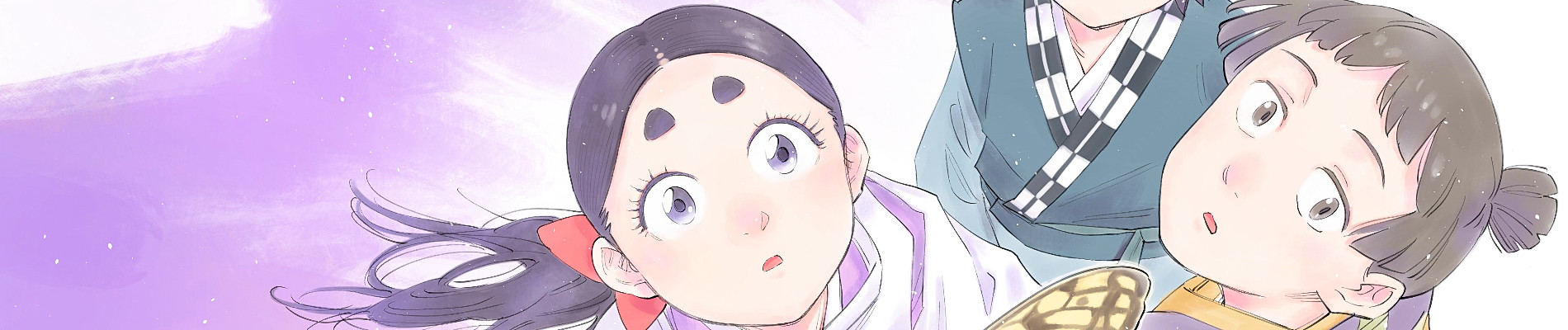
A 12-year-old boy spends his days performing for a traveling theater troupe and still cannot answer the most basic question about his work: why dance at all?
That is the starting point for The World Is Dancing, a historical drama about the childhood of Zeami Motokiyo, the figure remembered for shaping Noh theater. The anime does not begin with a monument, a textbook paragraph, or a grown master explaining his genius. It begins with Oniyasha feeling that the rules of performance are arbitrary, then trying to work backward from the first dance that makes sense to him.
By the time the official episode record reaches episode 10, that private question has widened. Oniyasha is no longer only studying why one performance feels good. He is caught between Sarugaku and Dengaku performers, between inherited technique and personal expression, and between the people allowed to stand at the center of the stage and the people told to support it from the side.
This is a source-based early guide and critical-consensus analysis, not a firsthand viewing report. Direct episode evidence covers episodes 1-3, 5, 8, 9, and 10, with the official episode index providing the current release boundary. The guide uses official episode pages, current AniList data, official production credits, independent episode criticism, and the current episode-10 record checked on September 2, 2026. It can explain the documented story, themes, structure, and audience fit. It does not claim personal judgment about acting, sound mixing, or the moment-to-moment quality of the animation.
The short answer
The available official story material documents a coming-of-age story about how art is made, who gets credit for it, and what a gifted child fails to understand about other people’s pain. The historical setting is not wallpaper. Patronage, class, gender, literacy, grief, and political authority all affect who can perform and what a performance is allowed to mean.
The series is currently listed as a 13-episode, 24-minute Summer 2026 release. AniList marked it as still releasing and listed episode 11 as the next episode, scheduled for September 7 at 9:00 a.m. Eastern time, when checked on September 2. That makes episode 10 the latest available stopping point in this guide. The story is still in progress, so the final answer to several character arcs must wait.
| If you want… | The documented fit |
|---|---|
| A historical protagonist | Oniyasha is a fictionalized young Zeami in 14th-century Japan. |
| A performance anime | Sarugaku and Dengaku traditions shape the conflicts, not just the scenery. |
| A rivalry with consequences | Zojiro’s troupe represents a community placed under pressure as Oniyasha’s ideas spread. |
| A fast tournament | The story includes contests and public performances, but it does not use a simple win-loss ladder. |
| A finished binge | Not yet; ten episodes are available in the current record, with 13 listed overall. |
The Summer 2026 anime preview is the better place for a broad seasonal shortlist. The World Is Dancing deserves a separate explanation because the documented material puts competing ideas about performance in the same story.
What the premise is really setting up
The official series introduction places the story in 1374, during the conflict between the Northern and Southern Courts. Ashikaga Yoshimitsu is becoming an increasingly powerful shogun. Oniyasha is born to Kan’ami, head of the Kanze troupe of sarugaku performers, and grows up inside a working theater family.
The future is visible from the beginning: the official site identifies Oniyasha as the boy who will one day create Noh, while AniList calls the story a fictionalized account of Zeami’s early life and identifies him as 12. The audience knows he will matter; the child has no reason to accept that his inheritance is meaningful.
Editorial reading: The useful choice is making confusion the starting point. Oniyasha does not wonder whether he is talented. He wonders why the left foot must come before the right, why one performance is called good and another bad, and why people dance when they could simply stand still. Those questions make technique feel like a problem to solve rather than a sacred tradition to admire.
The official Episode 1 synopsis gives the first answer a physical location. Oniyasha sees Shirabyoshi dance in a storehouse and feels, for the first time, that a dance is genuinely good. The moment is small in plot terms, but it establishes the series’ operating method. A child experiences an effect before he has the vocabulary to describe its cause.
Editorial reading: The point is not to make viewers applaud Zeami before he has done anything. It is to follow him constructing a theory of art from incomplete evidence—and learning that other people are not simply research material for his education.
Episodes 1-3: the first dance and the first wrong conclusion
The opening arc centers on Shirabyoshi, the dancer whose private performance gives Oniyasha his first definition of “good.” Anime News Network’s review of episodes 1-3 describes the encounter as a collision between a child’s search for artistic truth and an adult life marked by disappointment, neglect, and social exclusion.
That independent review also identifies the danger in Oniyasha’s response. He begins to treat suffering as the source of great art and material comfort as something that weakens it. The idea is emotionally understandable for a child who has just seen one overwhelming performance. It is also a terrible rule to apply to every artist.
Editorial reading: The distinction gives the early episodes their strongest documented tension. Shirabyoshi’s life cannot be reduced to the lesson Oniyasha wants to extract from it. Her dance may carry pain, but her pain is not a tool placed there for a future genius. The series’ central question therefore has an ethical edge: can Oniyasha learn from other performers without consuming their experiences and calling that learning empathy?
The same review notes that episode 3 shifts from intimate grief toward a prestigious opportunity to perform Okina for the shogun. Oniyasha is selected to perform the Senzai dance, which turns the abstract question of what makes art “good” into a public test. He is not only trying to understand performance anymore. His family, patrons, and political audience are waiting for an answer.
The storehouse-to-court movement is the useful map: one dance is private and accidental, while the later performance is public, assigned, and surrounded by expectations. Anime News Network also notes the opening’s movement between grief, comedy, and artistic pressure. That is a warning for viewers expecting a uniformly solemn historical series.
The first three episodes are therefore a better sample than a premise paragraph: they establish the question, the first answer, and the cost of mistaking one person’s life for a universal artistic formula.
Why the staff credits matter to the story
The official staff and cast page lists Toshimasa Kuroyanagi as director, Keigo Sasaki as character designer, and Sawako Kawamitsu as series composition and script writer. It also lists Noh choreography by Tsumura Reijiro, choreography by Kaiji Moriyama and Mikiko Kawamura, Noh supervision by Kohei Kawaguchi, and history supervision by Katsuyuki Shimizu.
Those credits do not prove that every scene succeeds. Editorial reading: They do establish that the adaptation assigned the central subject to people with specific responsibilities. The series has to distinguish performance traditions, make movement carry character information, and keep a fictionalized biography inside a real historical period. A generic “old Japan” backdrop would not answer those demands.
The official site identifies Cypic as the animation production studio. The earlier CyberAgent announcement uses the name CygamesPictures for the project, while the current official site uses Cypic. That is an announcement-era naming difference, not evidence of two separate anime productions. The CyberAgent release also lists the source manga, director, character designer, and the project copyright notice.
Music, lettering, Noh choreography, and history supervision receive named credits too. Editorial reading: A short seasonal synopsis can miss that the adaptation expects historical precision to meet invention, not merely period costumes.
For another historical character story shaped by its era, the site’s Vinland Saga character-arc analysis is a useful comparison. The World Is Dancing trades warfare for performance, but both ask what happens when the world rejects a character’s first explanation of it.
Episodes 5-8: Zojiro makes the rivalry matter
The conflict becomes more substantial when Oniyasha encounters the Dengaku Shinza troupe. The official Episode 5 synopsis places Oniyasha and Ishiya at Sanjo Bomon Palace, where the troupe led by Zojiro is already established. Oniyasha is intensely interested in Dengaku performance, evaluates Zojiro highly, and wants to cooperate even though the troupe treats him as an enemy.
Editorial reading: That is more substantial than a basic rival introduction. Zojiro is not present to give the protagonist a target. The official Zojiro profile describes him as a young Dengaku Shinza leader who is strict with himself and others and watches Oniyasha critically. His responsibility is collective. Editorial inference: because Zojiro leads a troupe, a conflict over Sarugaku’s influence could reach beyond whether he wins a single contest.
Episode 8 makes that pressure personal. The official Episode 8 synopsis describes a rematch in which people watching Oniyasha’s dance confront a dead person they cannot forget. Oniyasha puts his wishes and prayers for Toku-san into the performance, while Zojiro declines the fight after seeing what the dance is doing and then faces Yoshimitsu’s anger.
Anime News Network’s episode 8 review interprets the stage as a bridge to the netherworld and the performance as a message to Yoshimitsu about the ordinary lives held under the shogunate’s power. That is the reviewer’s reading, but it clarifies why the episode matters to the larger structure. Performance has moved from a private question about beauty to a public way of forcing authority to recognize people who might otherwise become policy or statistics.
The independent review also notes a limitation in the documented arc: the major performance arrives with less visible creative process than the setup might lead a viewer to expect. That is the pressure point in Oniyasha’s characterization—he absorbs other people’s stories, but must still learn the responsibility of turning them into art.
Editorial reading: Zojiro is what keeps that question from becoming a private lesson. He can recognize the power in Oniyasha’s work and still resent what it could do to Dengaku Shinza. The rivalry has consequences because both boys are connected to a future that is larger than their individual pride.
Chiharu widens the story beyond one gifted boy
Editorial reading: Chiharu is the character who prevents the series from becoming a museum tour led by a future genius. The official Chiharu profile says she gave up performing on stage because of her gender, still loves the world of dance, and joins flute practice. She is quick to fight and admires Nariko, who is described as her opposite.
Episode 9 gives that exclusion a quieter companion problem. The official Episode 9 synopsis says Chiharu begins learning to read and write under Oniyasha’s influence, then feels empty because she is not improving as quickly as she wants. Learning is not presented as a magical upgrade. The first new door is difficult, frustrating, and slow.
Editorial reading: The pairing makes artistic freedom concrete. Oniyasha is encouraged to experiment because others imagine what his talent might become; Chiharu has to work for access to basic tools. The question is who receives time, teaching, and the right to fail in public.
The official Episode 9 synopsis adds another important turn. Oniyasha and Zojiro decide to create a work together from Shiokumi, an unfinished Dengaku Shinza play. The troupe’s disagreement grows because some members cannot support the collaboration, while Chiharu’s literacy struggle continues beside it.
Editorial reading: That pairing is the clearest thematic angle in the documented sample. Innovation is not only a matter of having a brilliant idea. Someone needs permission to participate, time to practice, and a community willing to tolerate the awkward early stages. A tradition changes when an artist invents a new form, but it also changes when more people are allowed to enter the room.
The final three listed episodes may test whether the series believes in access as much as it believes in genius. Chiharu’s story is not a side note.
Episode 10: progress creates a new kind of tension
The official Episode 10 synopsis changes the question without resolving it. The third Maikurabe contest puts Oniyasha on stage while the people around him worry that he still lacks the necessary ability. The synopsis then says that he shows further evolution during the performance and surprises those watching.
That is a useful distinction from the usual prodigy story. Progress is not a clean declaration of mastery: other people remain anxious about the gap between Oniyasha’s ideas and skill, while the stage reveals that the gap is moving. Curiosity does not remove the need for practice.
Episode 10 also places Kogane in the audience wearing a distorted mask and sneaking into the performance. Editorial reading: The image turns observation into a pressure point. A performance is never only the thing the artist intends to show; it is also shaped by the people watching, hiding, or judging the artist’s progress. The masked audience member makes that social tension literal without requiring a final explanation from the current episode record.
The new episode does not support a full-season verdict or prove that every animation or acting choice succeeds. It does support a narrower update: the story has moved beyond “will Oniyasha discover a reason to dance?” toward “what happens when his answer is exposed to rivals, patrons, and people with their own reasons for watching?” With three episodes still listed, that is a real question rather than a manufactured cliffhanger.
What the early record asks from viewers
The official record and the independent criticism point to three expectations.
Expect a deliberate structure
The available record is not ten unrelated weekly ideas. It moves from the first dance, through court-performance pressure, into the Dengaku rivalry and the Shiokumi collaboration. Each step expands the meaning of performance. Viewers who want a clean winner every week may find it slow; viewers who want rehearsal, audience response, and social consequences will find a character study with public tests.
Expect unfamiliar terms to carry weight
Sarugaku, Dengaku, Noh, Okina, Senzai, and Shiokumi are not interchangeable labels. The specialist credits show that the production wants those distinctions to matter, while the source record lets some meaning arrive through who performs, who watches, and who is allowed to object. That suits viewers who enjoy learning a culture through its conflicts, but may feel like homework to anyone seeking a transparent genre objective.
Expect Oniyasha to be wrong in interesting ways
Oniyasha’s curiosity is generous when it draws him toward other people. It is self-centered when he treats their pain as material for his artistic education. The story’s interest is not whether he is secretly perfect. It is whether his intelligence can become responsibility.
That makes him a less immediately comfortable protagonist than a child whose talent is always framed as pure. A viewer looking for a flawless prodigy should wait for a different show. A viewer interested in how a gifted person learns that admiration is not the same as understanding can use this early record as a clear character map.
The safest expectation is a strange historical drama that can treat a performance as sacred in one scene and puncture the mood in the next; the independent criticism describes the same movement between grief, performance politics, and exaggerated comedy.
Who may want to start it now?
Start with the first three episodes if the following sounds useful:
- Historical fiction focused on culture, class, and responsibility rather than battlefield spectacle.
- Coming-of-age storytelling in which the protagonist’s first explanation of the world is allowed to be wrong.
- Anime that makes performance, rehearsal, and audience response part of the plot.
- Rivalries where both sides represent a community instead of one side existing only to make the hero look impressive.
- A 24-minute weekly series that rewards attention instead of background streaming.
Wait for the season to finish if a complete emotional payoff is essential before starting. AniList’s record listed 13 episodes and episode 11 as next for September 7 at 9:00 a.m. Eastern time when checked on September 2, so the final shape is close but not complete. The short anime guide for busy adults is a better resource for a finished, compact binge; The World Is Dancing is a weekly commitment with a clear ten-episode checkpoint, not a completed package.
The Anime News Network streaming report reported a June 29 HIDIVE debut ahead of the July 2 Japanese television premiere. The AniList record also carried the note that streaming began three days ahead of television on Prime Video and HIDIVE. Platform availability can change, so use the current service listing before subscribing.
Takeaway
Editorial reading: The documented early arc makes The World Is Dancing a story about access as much as artistic talent. Oniyasha begins by asking why anyone dances. The answer keeps changing as the available story material adds private grief, public power, rival traditions, blocked education, and the cost of asking other people to help build something new.
The series’ clearest dramatic question is not “Will Oniyasha become Zeami?” History has already supplied that answer. It is “What will he have to learn before his talent stops making other people smaller?” Zojiro gives that question a rival with a community behind him. Chiharu gives it a person who loves performance without being granted the same route into it. The unfinished Shiokumi collaboration gives the remaining episodes a concrete place to test the idea.
For viewers choosing one more summer series, the practical recommendation is simple: sample episodes 1-3 when a patient historical performance drama sounds better than another power ladder. Stop there if the vocabulary and measured structure feel like homework. Continue through episode 10 if the conflict between inherited art, personal feeling, and social permission is the part that holds attention.
The official record does not support a final-season verdict yet. It does support a narrower one: The World Is Dancing has established a specific premise, and its next three listed episodes have a meaningful question to answer rather than merely another fight to stage.
Sources checked
All sources below were checked on September 2, 2026. Commercial links were not used as evidence, and this post contains no commissioned links.
- Shochiku official series introduction
- Shochiku official staff and cast
- Shochiku official episode index
- Shochiku official Episode 1 synopsis
- Shochiku official Episode 5 synopsis
- Shochiku official Episode 8 synopsis
- Shochiku official Episode 9 synopsis
- Shochiku official Episode 10 synopsis
- AniList anime record
- Anime News Network review of episodes 1-3
- Anime News Network review of episode 8
- Anime News Network HIDIVE streaming report
- Shochiku official Chiharu profile
- Shochiku official Zojiro profile
- CyberAgent official announcement and copyright notice
Image credit: ©Kazuto Mihara, KODANSHA/“The World Is Dancing” Production Committee. The cover and thumbnail use the real banner and cover art returned by AniList for anime record 206521. The CyberAgent announcement states, “Copyrights must be indicated when posting or using the images/material.” The asset provenance and editorial-use review are recorded in the evidence packet linked in this post’s front matter.